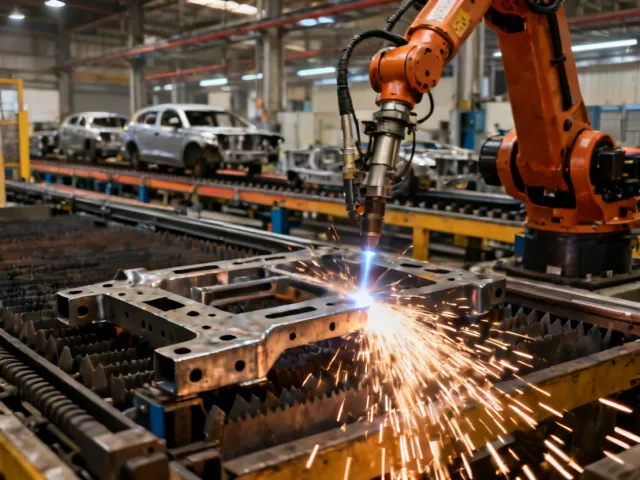
Our plasma and laser cutting systems serve fabricators across automotive, shipbuilding, structural steel, HVAC, energy, and general manufacturing. Here is how they are being used on real production floors.
Automotive Tier 1 and Tier 2 suppliers use Hypertherm HyPerformance plasma and fiber laser systems to cut chassis components, brackets, reinforcement plates, exhaust flanges, and structural sub-assemblies from mild steel, high-strength low-alloy (HSLA) steel, and aluminum sheet.
True Hole technology eliminates secondary drilling on mounting holes in mild steel components from 6 mm to 25 mm thickness. ProNest nesting optimizes blank shapes on coil-fed or sheet-fed lines to reduce scrap. One North American Tier 1 supplier reported reducing their scrap rate from 14% to 7% after switching from manual nesting to ProNest on their HPR260XD line processing 8 mm HSLA steel for frame rails.
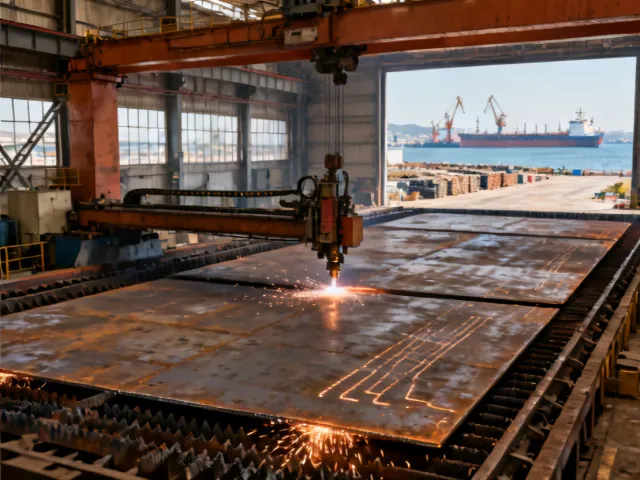
Shipyards cut hull plates, deck sections, bulkheads, and structural members from mild steel plate ranging from 6 mm to 80 mm. Hypertherm HPR400XD systems handle the full thickness range, with high-definition plasma quality on plates up to 50 mm and severance cutting on heavier stock.
Bevel cutting capability produces weld-preparation edges directly on the cutting table, eliminating downstream manual torch beveling on butt joints and T-joints. LongLife oxygen technology is particularly valuable in shipyard operations where high pierce counts (200-500 pierces per shift) would rapidly consume standard electrodes.
A Korean shipyard running two HPR400XD units on their panel line reported electrode life averaging 1,400 starts with LongLife technology, compared to 450-500 starts on their previous non-Hypertherm systems. This reduced consumable changeover frequency from every 2-3 hours to roughly every 6-7 hours on a typical plate-cutting shift.
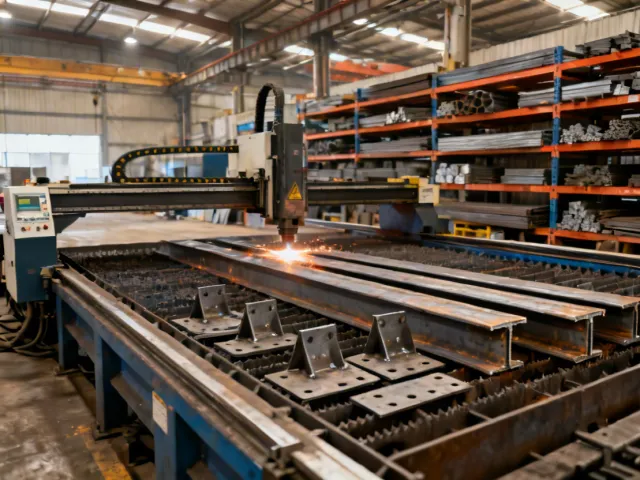
Structural steel fabricators process gusset plates, base plates, connection brackets, stiffeners, and coping cuts for I-beams and wide-flange sections. Material is predominantly A36 and A572 Grade 50 mild steel in thicknesses from 6 mm to 50 mm.
The Powermax 85 SYNC and Powermax 105 handle lighter-gauge connection work and coping on CNC tables. For heavier plate work, the HPR130XD and HPR260XD provide high-definition cut quality on gusset plates and base plates where weld quality depends on edge preparation.
True Hole bolt patterns on base plates and connection angles save 30-60 seconds per hole compared to drilling, accumulating significant time savings on jobs with hundreds of bolt holes per assembly. One fabrication shop in Texas processing 400+ connection plates per week estimated annual labor savings of $35,000 after switching bolt hole production from drilling to True Hole on their HPR260XD.
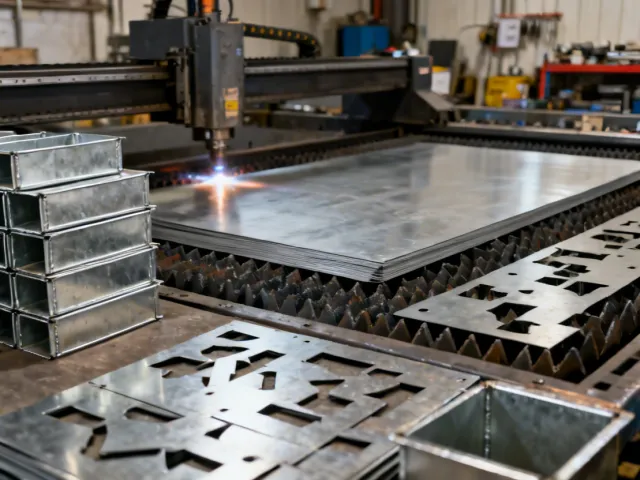
HVAC fabricators cut galvanized steel, stainless steel, and aluminum sheet in thicknesses from 0.6 mm to 3 mm for rectangular ductwork, round fittings, and custom transition pieces. The Powermax 45 SYNC and Powermax 65 SYNC provide clean edges on thin gauge material with minimal heat-affected zone.
FineCut consumables on Powermax systems produce a narrow kerf on thin stock, improving edge quality and reducing cleanup compared to standard consumables. On 1 mm galvanized steel, FineCut consumables produce edges comparable to laser cutting for many ductwork applications, though at slower speeds and with wider kerf than fiber laser.
For higher-volume HVAC operations, fiber laser cutting systems from 1-4 kW provide faster cutting speeds on thin gauge material with narrower kerf and less thermal distortion, making them the preferred choice for operations processing more than 50 sheets per shift.
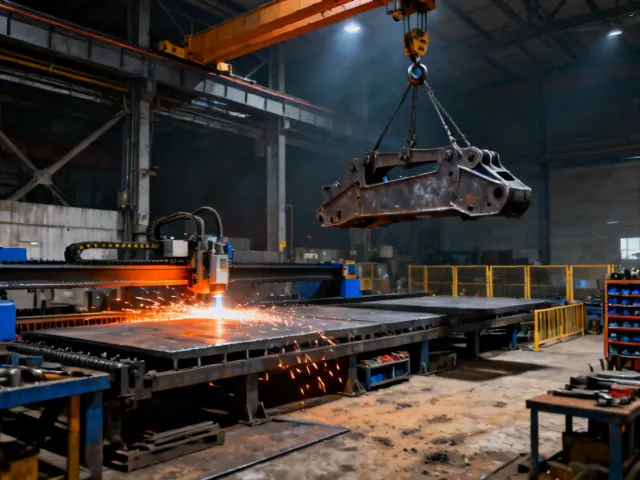
Mining equipment, construction machinery, pressure vessel, and wind tower fabricators process thick mild steel and specialty alloys from 12 mm to 80 mm. The HPR400XD handles the full range with high-definition plasma quality up to 50 mm and severance cutting on heavier plate.
Wind tower manufacturers use Hypertherm systems to cut door frames, flange sections, and internal platform components from 25-50 mm plate. Bevel cutting for weld preparation on circumferential seams is critical for tower structural integrity, and automated bevel angles must be consistent across hundreds of joints per tower.
Pressure vessel fabricators benefit from the consistency of CNC-controlled plasma cutting when processing SA516 Grade 70 and similar pressure-rated steels, where edge quality directly affects weld qualification and vessel certification.
Not sure which system fits your application? This table provides a starting point. Contact our application engineers for a specific recommendation based on your materials and production requirements.
| Application | Material Thickness | Recommended System | Key Benefit |
|---|---|---|---|
| Field Repair & Maintenance | 1-16 mm | Powermax 45 / 45 SYNC | Portability, 120/240V input |
| General Fabrication | 3-25 mm | Powermax 85 SYNC / 105 | Versatility, CNC or handheld |
| Thin Sheet (HVAC, Signage) | 0.5-3 mm | Fiber Laser 1-4 kW | Speed and edge quality on thin stock |
| Production Plate Cutting | 6-50 mm | HPR130XD / HPR260XD | True Hole, LongLife, cut quality |
| Heavy Plate & Shipyard | 25-80 mm | HPR400XD | Thick plate capacity, bevel cutting |
| High-Speed Mixed Metals | 1-30 mm | Fiber Laser 6-30 kW | Speed on stainless, aluminum, thin steel |